
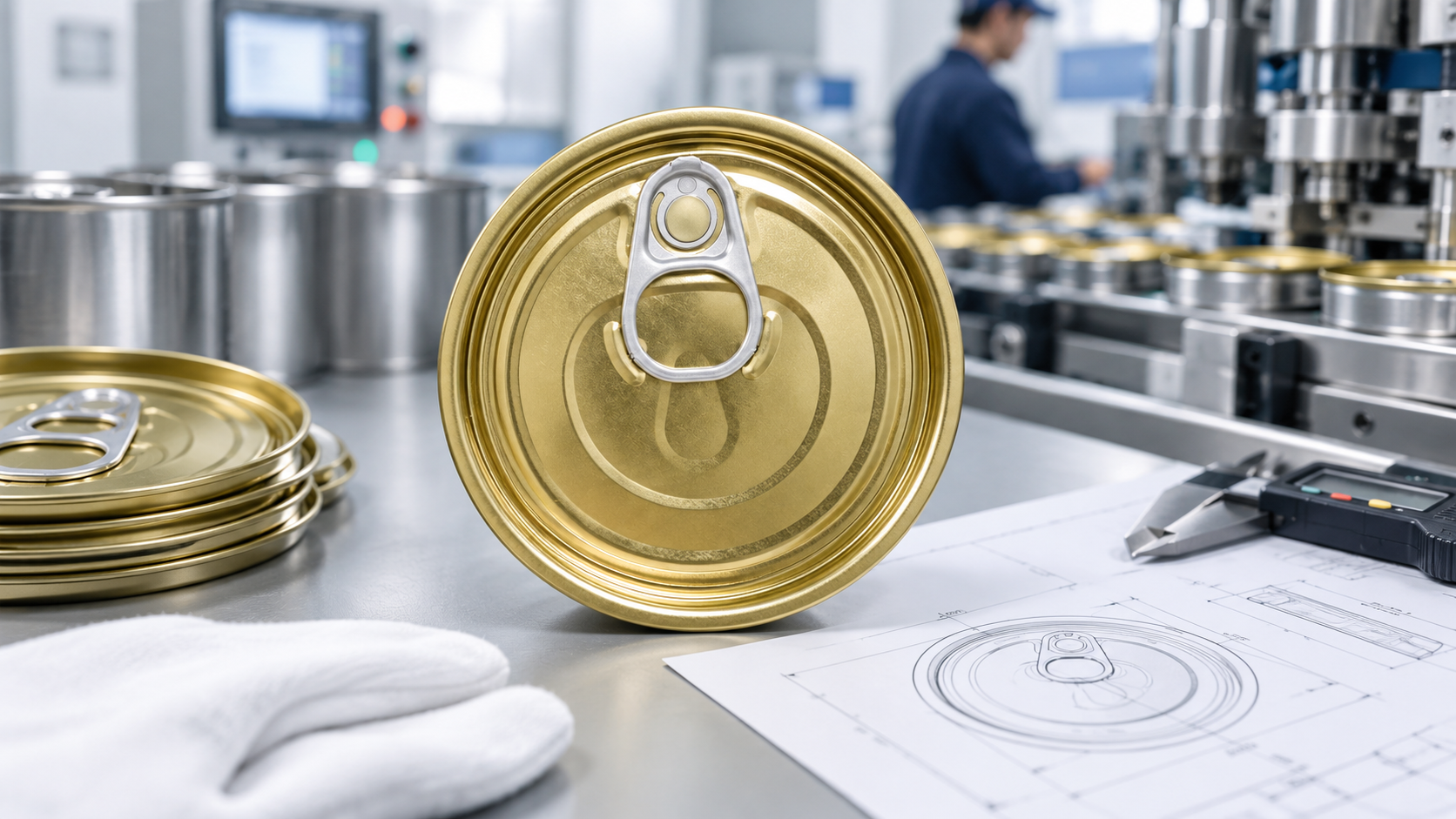
Why Easy Open Ends Fail on Seaming Lines: 5 Things to Check
An easy open end can look perfectly normal when it arrives at a factory and still cause problems during production. Ends may feed inconsistently, fail to seat correctly, or produce seams that fall outside the can maker's approved limits.
When this happens, it is tempting to blame the latest batch of lids. Sometimes the end is responsible. Sometimes the cause is the can body, seaming tooling, machine setup, or damage that occurred during transport and handling.
The quickest way to narrow down the cause is to compare what changed, inspect the components, and run a controlled production check. Here are five areas worth investigating before rejecting a batch of easy open ends.
1. Check Whether the Problem Follows One Batch or One Machine
Start with a simple question: does the problem occur with every batch of easy open ends, or only with one delivery?
If the issue appears immediately after changing suppliers or introducing a new batch, compare the affected ends with an approved reference sample. Check the product identification, dimensional records, curl condition, and any relevant changes in material or specification.
If the same ends run normally on one seaming machine but not another, the equipment setup deserves attention. Differences in chucks, seaming rolls, wear condition, or machine adjustment may explain why the same component behaves differently.
Keep the comparison controlled. Avoid changing the EOE specification and machine settings at the same time, because doing so makes the original cause harder to identify.
2. Inspect the Curl and the Can Body Flange
The curl is not just the rolled edge of an easy open end. It forms part of the geometry used to create the double seam. Damage or dimensional variation in this area can affect how the end enters the seaming operation.
Inspect a sample of ends for dents, flattened curls, deformation, and other visible damage. Compare the relevant dimensions with the approved drawing or specification. Do not rely on visual appearance alone when dimensional measurements are required.
Next, inspect the can body flange. A bent, damaged, or inconsistent flange can interfere with end placement and seam formation even when the EOE itself meets its specification.
Both components matter. Confirming that the end has the correct nominal diameter does not prove that its curl and the can body's flange are compatible.
3. Look at End Feeding and Seating Before Adjusting the Seamer
Not every production problem begins at the seaming rolls. If ends are not being picked up, transferred, or seated consistently, inspect the feeding system before making adjustments to the seaming operation.
Useful checks include:
- Whether ends are stacked and presented consistently.
- Whether damaged or deformed ends are present in the feed path.
- Whether the end is correctly positioned on the can body before seaming.
- Whether the feeding mechanism, guides, or handling components need adjustment.
- Whether the issue occurs at a particular machine station or throughout the line.
Record where the first abnormal condition appears. A feeding problem and a finished double-seam defect require different investigations, so identifying the stage where the problem begins can save unnecessary adjustments.
4. Review the Seaming Tooling and Operating Settings
Double seaming involves forming the end curl and can body flange into interlocking hooks. The first operation establishes the seam formation, while the second operation brings the seam to its intended final condition.
Incorrect settings, worn tooling, or an unsuitable chuck and end combination can produce inconsistent results. Depending on the defect, the investigation may include:
- Seaming chuck compatibility and condition.
- First-operation and second-operation roll profiles and settings.
- Tooling wear, alignment, and machine condition.
- End seating and can-body positioning.
- Measurements of the finished seam against the approved specification.
Do not adjust the machine based on a single visual symptom. Have qualified personnel assess the seam using the applicable inspection procedure and machine manufacturer's guidance. The correct adjustment depends on the can design, equipment, and measured defect.
5. Check How the Ends Were Stored and Handled
Problems may begin before the ends reach the seaming line. Packaging damage, rough handling, moisture exposure, or contamination can affect the condition of metal ends during storage and internal transport.
Check whether cartons or protective packaging are damaged, whether stacks have been crushed, and whether the ends show signs of deformation, contamination, or coating damage. Compare affected cartons with undamaged stock when possible.
Storage and handling requirements should follow the supplier's instructions and the product specification. If damage is found, retain representative samples and the relevant packaging information before deciding whether the entire batch is affected.
A Practical Troubleshooting Checklist
| Observed problem | First checks |
|---|---|
| Ends feed or transfer inconsistently | End condition, stacking, feeding mechanism, guides, and positioning. |
| Ends do not sit correctly on the can body | End dimensions, curl condition, can-body flange, and seating mechanism. |
| Seam measurements change after a batch change | Compare batch identification, approved drawings, component dimensions, and machine settings. |
| Seam defects appear across multiple batches | Investigate common equipment, tooling, can-body, and process factors. |
| Visible dents or coating damage are found | Inspect packaging, storage, handling, and the affected product lot. |
This checklist helps narrow the investigation; it does not establish the root cause by itself. Follow the can maker's quality procedures and hold potentially nonconforming product until it has been evaluated.
What to Send Your EOE Supplier When Reporting a Problem
A message saying that the lids are not working on the line does not give a manufacturer enough information to investigate efficiently. A few specific details can make the conversation much more useful.
- EOE model and batch or lot identification.
- Quantity affected and when the problem first appeared.
- Can-body specification and relevant technical drawings.
- Seaming-machine and tooling information.
- Photos of the affected ends and any visible defects.
- Measured seam results and the applicable acceptance limits.
- Whether the issue also occurs with an approved reference batch.
Where practical, retain unopened samples and samples from the affected production run. Clear records help both parties distinguish a component issue from a machine or process issue.
How Hongfeng Metal Supports EOE Sourcing Projects
Hongfeng Metal Technology Development (Tianjin) Co., Ltd. manufactures easy open ends for metal packaging applications. The company reports more than 20 years of industry experience, 12 production lines, an 18,000 m² factory area, and annual production capacity of approximately 2 billion pieces.
When evaluating a new EOE specification, buyers should share the required size, can-body details, material and coating requirements, and relevant production conditions. Providing an approved drawing or existing sample can help clarify the specification before an order is placed.
Learn more about Hongfeng Metal's easy open end manufacturing capabilities or review the easy open end technical specifications guide.
Frequently Asked Questions
Why can the same easy open end perform differently on two seaming lines?
The lines may use different chucks, seaming rolls, machine settings, feeding systems, or can-body specifications. The complete end-and-can system should be checked before concluding that the EOE is defective.
Should I change the seaming settings when a new EOE batch arrives?
Not automatically. First compare the incoming ends with the approved specification and confirm that the can body and tooling are correct. Any required adjustment should follow a controlled inspection and trial process.
What is the most useful evidence when reporting an EOE problem?
Provide the lot identification, affected quantity, can-body specification, machine details, clear photographs, and measured seam results. Retained samples are also useful for investigation.
Can nominally identical EOE sizes be used interchangeably?
Not without confirming the relevant dimensions and compatibility. The nominal size is only one part of the specification; curl geometry, can-body flange, tooling, and process requirements also matter.
Discuss Your Easy Open End Requirements
If you are qualifying a new supplier or investigating an issue on your canning line, start with the actual specification and production evidence rather than assumptions based on appearance alone.
Contact Hongfeng Metal with your required EOE model, can-body details, application, and estimated order quantity to discuss your sourcing requirements.

